
Artist's commentary
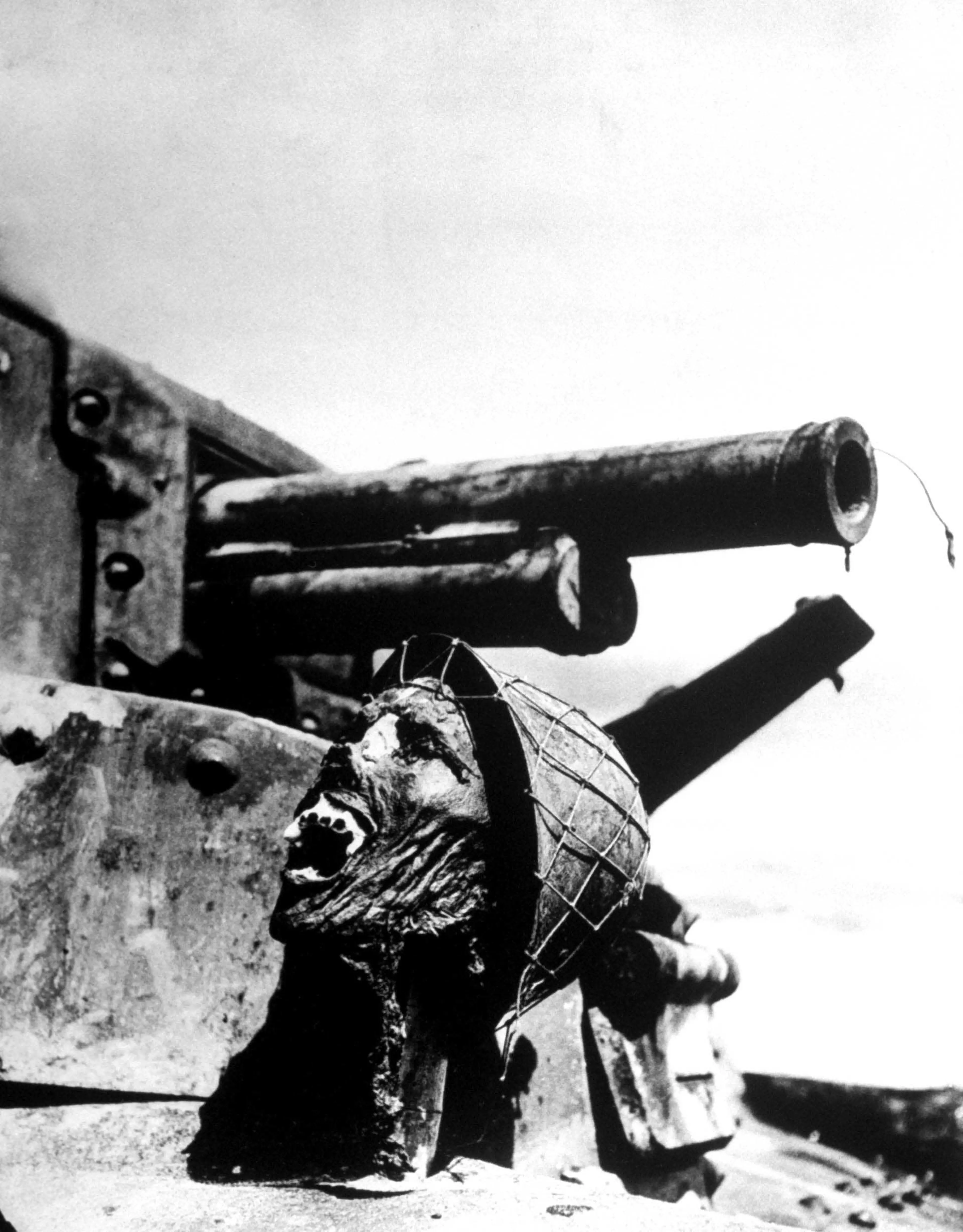
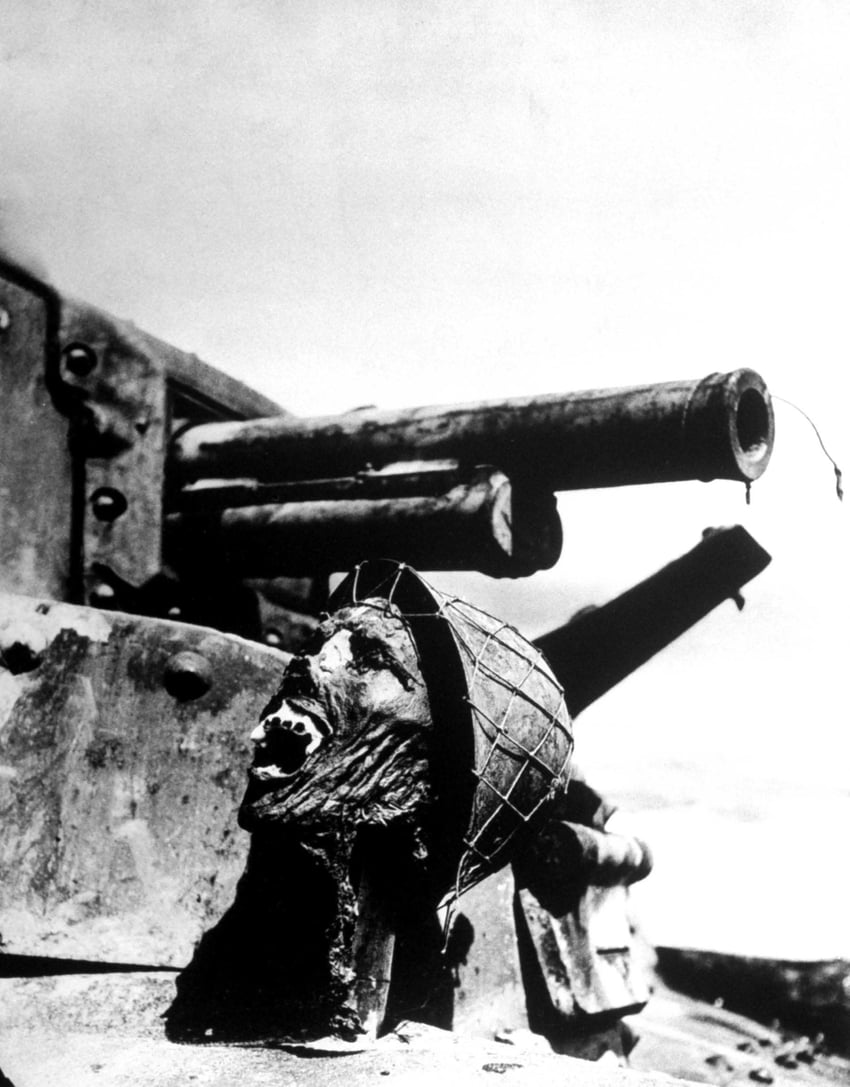
A Japanese soldier’s skull is propped up on a burned-out Jap tank by U.S. troops. Fire destroyed the rest of the corpse.
The caption that accompanied Morse’s disquieting photo in the Feb. 1, 1943, issue of LIFE read, “A Japanese soldier’s skull is propped up on a burned-out Jap [sic] tank by U.S. troops. Fire destroyed the rest of the corpse.”
Morse, however—still remarkably spry at 96—remembers it a bit differently. As anyone with even a passing knowledge of World War II knows, U.S. troops (and troops of every other country who fought in the long, brutal conflict) sometimes engaged in the sort of grisly behavior evinced in Morse’s photograph. But in the photographer’s recollections of that day, it seemed just as likely that the Japanese were the ones who placed the torched skull on that ruined tank as a gruesome trap for curious Americans.
“The Army had taken over from the Marines and I was traveling with a group of soldiers on patrol. In the forests on those islands, you had to walk in a single line. The brush was so damn thick that if you didn’t keep your eye on the shoes of the guy in front of you, you were lost. I think it was three or four days of solid walking, but we were fine. We were all young..."
"We came to a big opening on the beach, and there was a tank with a skull on it, right near the turret. The sergeant leading the patrol looks at it and says, ‘Guys, that skull has been put there for a reason, and the Japanese have probably got mortar shells aimed right at this spot.’ A disgusting scene like that will always draw people in, and the idea, of course, was that any American troops who came along would obviously want to stop and take a look."
“‘Everybody stay away from there,’ the sergeant says, then he turns to me. ‘You,’ he says, ‘go take your picture if you have to, then get out, quick.’ So I went over, got my pictures and ran like hell back to where the patrol had stopped.”
Leave a comment